Find out more about our latest publications
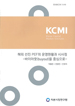
The Current Landscape of Overseas PEFs -A Close look at buy-outs and their implications
Survey Papers 12-03 Dec. 01, 2012
- Research Topic Capital MarketsAsset Management/Pension
This report reviews the current landscape of global private equity with a focus on buyouts and sheds light on PEF’s desired future direction in Korea. Private equity is practically defined as investments in non-listed companies. It takes the form of limited partnerships which have been the most effective way to minimize information asymmetry and incentive problems. Private equity plays an important role in the capital markets such as helping realize value potential for corporations, providing an additional asset class for asset management industry, inducing the development of investment banking through demand for IPO and M&A, and creating national wealth from overseas investments. Buyouts as a dominant form of investment in private equity have gone through a typical boom-bust cycle and the source of value creation has changed from leverage in the 1980s and multiple expansions in the 1990s to value creation in the 2000s. These changes were driven by the macroeconomic and financial market environment.
There have been significant cyclical and long-term changes in the global buyout market in the 2000s. Cyclical changes in the buyout market include: 1) a significant increase in large scale investments, 2) an increase in club deals, 3) an increase in sale through auctions, and 4) significant expansion in acquisition loan markets such as CLO. Long-term changes include: 1) Convergence of buyout funds and hedge funds, 2) listing of global buyout funds, 3) a decrease in investment leverage, 4) expansion in the extent of industries for investment, 5) GP’s active expansion into overseas markets, 6) a significant increase in the fund of funds, and 7) development of secondary markets for LP’s fund units.
In every part of the buyout investment cycle comprised of fundraising, investment, value creation, investment, and exit, GPs have developed best practices in order to maximize investment returns. First, successful fundraising takes a track record, clear sector, and investment strategy to appeal to LPs. In particular, first-time funds need to approach university endowments, corporations, and individual investors rather than pension funds. They also have to raise project funds(pledge funds) and increase GP contribution to the fund. Second, most buyout funds have deal sourcing strategies, such as relationship building with management and introduction from advisory staff, to secure proprietary deal flows that are more profitable than auctions. Third, regarding value creation, investment returns can be derived from leverage, increase in market multiples, operational improvement, and growth. Among these, operational improvement and growth account for the majority of investment returns for global GPs. Operational improvement involves an improvement in profit margin from cost reduction, slimming- down of operations, and better incentives for management and employees. Growth involves organic growth from changing corporate business strategies and also growth by M&As where the buy-and-build strategy plays an important role in value creation. Fourth, exits by M&A take up the largest proportion, whereas exits by IPO have been decreasing over the last two decades. Recently, exits by secondary transactions with other GPs have been increasing.
PEFs in Korea have been rapidly growing since inception in 2004 and are expected to continue to grow. One prominent PEF characteristic in Korea regarding fundraising is that the average PEF is too small due to the dominance of project funds. This stems from the lack of full trust of LPs in GP capability. Another characteristic is that pension funds do not contribute to PEFs as actively as in the overseas private equity market. None of the foundations, endowments, and wealthy families contribute. Regarding investments, although leading GPs focus on buyouts, followers focus more on minority investments. PEFs in Korea have invested in diverse industries with limited leverage, much lower than that of overseas market. Though not publicly available, average investment returns are likely to be limited due to low leverage and most returns are unlikely to be from value creation activities because of relatively short investment holding periods. For exits, M&A takes up the largest proportion, but exits by non-standard routes such as open market sales, buybacks (or putbacks),and paid recapitalization account for a larger proportion than in overseas market. Despite the positive role, diverse exit routes weaken incentives for serious efforts for value creation.
A very unique feature of PEF in Korea is that there have been policy oriented contributions by pension funds and policy financial institutions. National Pension Service(NPS) has been running the Corporate Partnership program where NPS contributes to a PEF dedicated to joint overseas investments with a Korean corporation. The PEF 1:1 match-invests with the Korean corporation when it finds an attractive overseas investment opportunity. In addition, Korea Finance Corporation (KoFC) has been contributing to certain PEFs mandated to invest in sectors with high growth potential and middle-market corporations in Korea. This is in an effort to help financing and enhancing capabilities of the investee companies.
In the regulatory viewpoint, the Korean version of PEF was introduced under the title of Samotoojajeonmoonhwaisa(translated as specialized private investment company) through the Indirect Investment Management Business Act enforced on December 6, 2004. Its main focus was to introduce a buy-out type PEF in Korea. Most of the provisions in the Act were carried over to the Financial Investment Services and Capital Market Act (FSCMA), which went into effect on February 4, 2009. There has been no systemic and substantive change to the Korean PEF regulatory guidelines until today. Unlike PEF regimes in foreign countries, Korea maintains sophisticated rules mainly arising from the special regulatory circumstances in Korea such as the separation rule of industry and banking capital and anti-trust laws. As such, most of the complicated rules are related to management of PEF assets. It goes without saying that these complicated regulations on PEF asset management considerably restrict PEF businesses and operations. In this regard, our review of the Korean PEF regime looks at the current PEF regulations under FSCMA, analyzes some problems of the current regime, and pinpoint five areas that should be deregulated in the near future.
For long-term development, Korean PEFs need to expand into overseas markets to take advantage of attractive foreign investment opportunities. Successful entry into overseas markets requires the following principles. First, private equity that has a strong locality requires understanding of local markets, industry, corporate governance, and networks. Therefore, a gradual approach in target sectors, strategy, overseas partnership, degree of value creation efforts, and localization is necessary. Second, independent entry into overseas market from the start is an inefficient, risky strategy that takes a long time. Therefore, at the beginning, it is advised to invest jointly as a financial investor for deal flows and risk minimization with large corporations in Korea which have overseas networks and actively seek foreign investment opportunities. Later on, when PEFs have acquired sufficient experience in foreign M&As and have built overseas networks, PEFs can manage their overseas investments independently. Third, due to difficulty in securing control in management, lack of understanding of corporate culture, and uncertainty in the exit environment, PEFs are advised to focus on minority positions in joint overseas investments with Korean corporations as financial investors and move to value creation strategies in the mid to long term. Fourth, PEFs can invest in overseas markets through contributions of domestic LPs in the early stage, and as track records build up, they can invite local and international LPs for more stability in fundraising and global recognition.